


Camel hair is one of the less common natural fillings for duvets and pillows, and buyers often ask the same questions about it: what exactly is the fibre, how is it collected, and how does it differ from wool? This guide answers those questions and lists what to check before you specify it.
What camel hair is
According to Encyclopaedia Britannica, camel hair is a fine animal fibre from camels, mainly the Bactrian type. It is the soft, short undercoat that insulates the animal, and it is usually gathered when the camel sheds its coat rather than by shearing or plucking. The fine undercoat is then separated from the coarse outer hair by combing. Its natural colour is usually a reddish tan.
The same source notes that camel hair is prized for insulation and is more sensitive to chemicals than wool, which is one reason care labels matter.
What it does in a duvet or pillow
Camel hair has a natural structure that helps keep body temperature balanced as conditions change. Its colour varies with the region it comes from, from tan and light brown to yellow and reddish tones. For a buyer, that means colour differences between batches are natural and are not a defect.
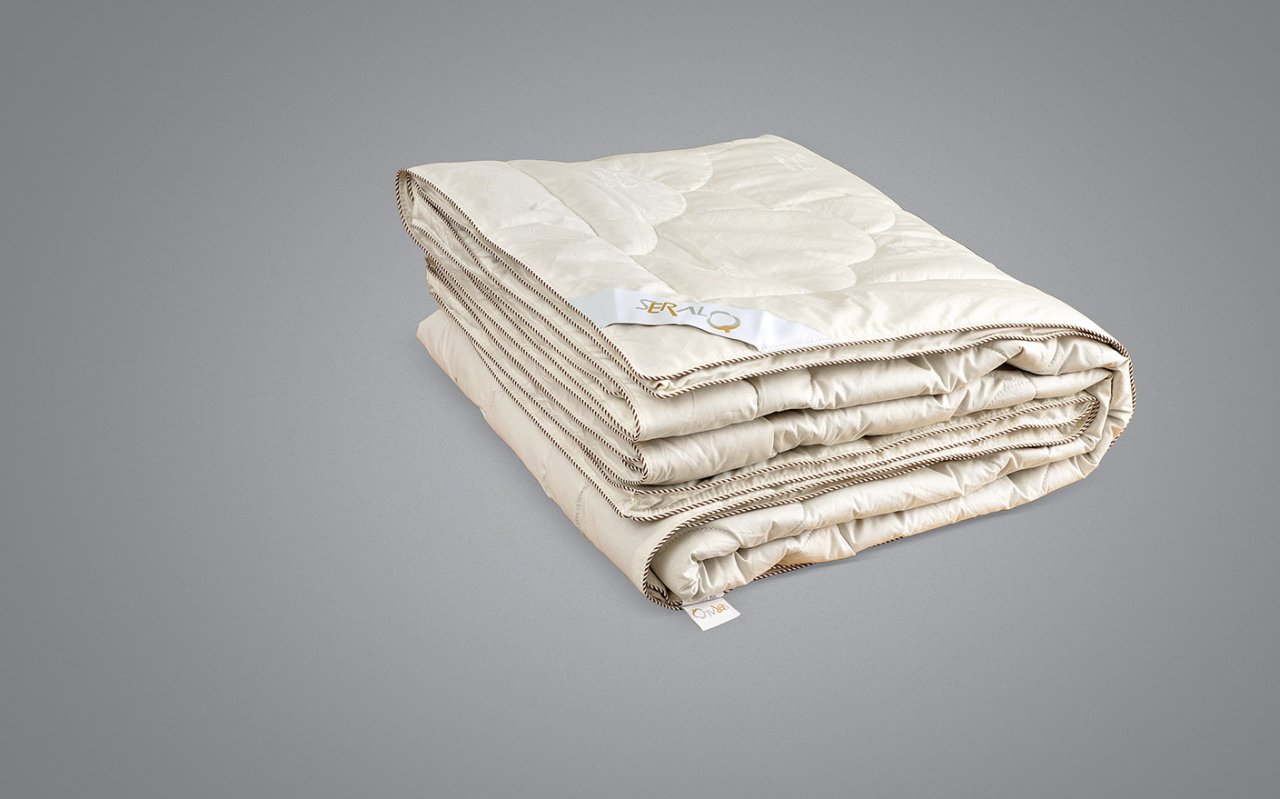
Seral's Camella series uses a 100% camel hair filling in a cotton cover. It is available as the Camella Duvet Q238 and the Camella Pillow P138.
Camel hair compared with other fillings
| Filling | Animal fibre | What buyers should know |
|---|---|---|
| Camel hair | Yes | Natural temperature balance; natural colour variation; follow the care label closely |
| Wool | Yes | Insulates against heat and cold and handles moisture well; hard-wearing and keeps its shape. See our wool duvet guide |
| Alpaca | Yes | Soft, light and warm for its weight; Seral blends 75% alpaca with 25% wool |
| Microgel | No | Soft, light and easy to wash; a good fit when guests or buyers prefer no animal fibres. See down vs down alternative duvets |
What to check before you order
- Filling percentage. The label should state the share of camel hair. Seral's Camella products are 100% camel hair filling; if a supplier offers a blend, ask for the exact ratio.
- Guest policy. Camel hair is an animal fibre. If your hotel offers a pillow menu, mark animal-fibre options clearly so guests can choose.
- Care instructions. Ask for the supplier's care label and confirm it suits your laundry. Because camel hair is sensitive to chemicals, do not assume it can be washed like a synthetic filling.
- Colour tolerance. Agree in writing that natural colour variation is acceptable.
- Weight and size. Specify filling weight in grams and the finished size. See our duvet sizes guide.
For a wider comparison of fillings, read pillow and duvet fillings explained and our hotel pillows and duvets buyer's guide.
Next steps
See the Camella Duvet Q238 and browse our duvets and pillows. To request samples or a quote, contact Seral with your sizes and quantities.