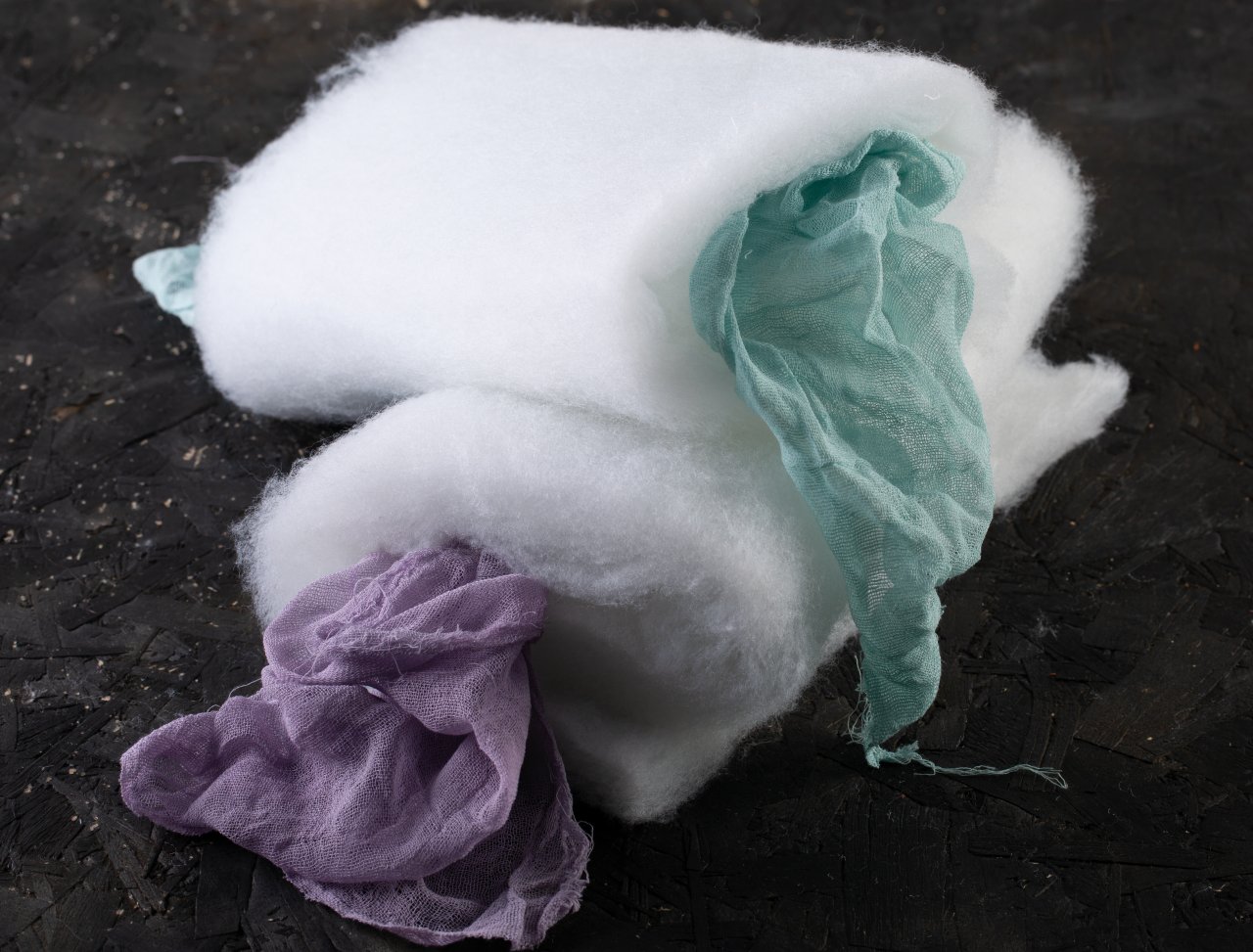


Polyester fibre is the most common filling in pillows, duvets and wadding. More buyers now ask for recycled polyester, often called regenerated fibre in Türkiye. This guide explains what it is, how it compares with virgin fibre and what you need if you want to make a recycled claim.
A quick look at the numbers
Polyester is a synthetic fibre that resists stretching and shrinking and dries quickly. According to Textile Exchange's Materials Market Report 2025:
- Polyester made up 59% of global fibre production in 2024.
- Recycled polyester was about 12% of all polyester.
- Almost all recycled polyester (98%) is made from plastic bottles. Textile-to-textile recycling is only around 2%.
What “regenerated” means
In the Turkish fibre and wadding trade, rejenere (regenerated) is the usual word for polyester fibre made from recycled raw material, and orijinal for fibre made from virgin raw material. Seral uses these terms on its product pages. In English, “regenerated fibre” can also mean regenerated cellulose fibres such as viscose, so in your own documents “recycled polyester” is clearer.
On the sewn-in label, recycled polyester is still polyester. Regulation (EU) No 1007/2011 lists polyester as a fibre name. “Recycled” is not a separate fibre name. It is a claim, and a claim needs evidence.
Virgin or recycled: what changes in bedding
Both are polyester. Recycled fibre is often chosen for cost or sustainability reasons. Virgin fibre usually gives a more uniform white colour and handfeel. For hidden layers, such as the inside of a sofa back, recycled fibre is common. For a visible white filling or a premium product, buyers often compare both. The best way to decide is to compare samples of the same weight side by side.
Seral produces several of its fibres and waddings in both versions:
| Product | Raw material |
|---|---|
| Silicone Fibre | Produced from original and regenerated raw material |
| Ball Fibre | Original or regenerated, at the customer's request |
| Regenerated Wadding and Original Wadding | Regenerated or original (virgin) fibre |
| Regenerated Siliconised Wadding and Original Siliconised Wadding | Regenerated or original siliconised fibre |
Making a recycled claim
If you want to say “recycled” on your product or packaging, you need proof. Two widely used schemes are run by Textile Exchange: the Recycled Claim Standard (RCS) and Global Recycled Standard (GRS). Both certify recycled input and the chain of custody through the supply chain. The GRS adds social, environmental and chemical requirements.
Rules on green claims are also getting stricter. In the EU, Directive (EU) 2024/825 has applied since 27 September 2026. Generic environmental claims need evidence, and sustainability labels must be based on a certification scheme or set by public authorities. Check the rules in your market and agree the wording with your supplier before you print labels or packaging.
What to ask your supplier
- Share of recycled fibre: Is the filling 100% recycled or a blend? Ask for the percentage in writing.
- Source: Is the recycled raw material from bottles or from textiles?
- Certificate: If you need to make a claim, ask whether the fibre is certified (for example to RCS or GRS) and which documents come with each delivery.
- Samples: Compare colour, handfeel and loft with a virgin sample of the same weight.
- Other certificates: If you also need a product certificate such as OEKO-TEX® STANDARD 100, check that it covers the specific product. See Seral's certificates.
For more about fillings, read pillow and duvet fillings explained and our polyester wadding guide.
Next steps
See our fibre and wadding range, or read about our private label service. For samples and a quote, contact Seral.