
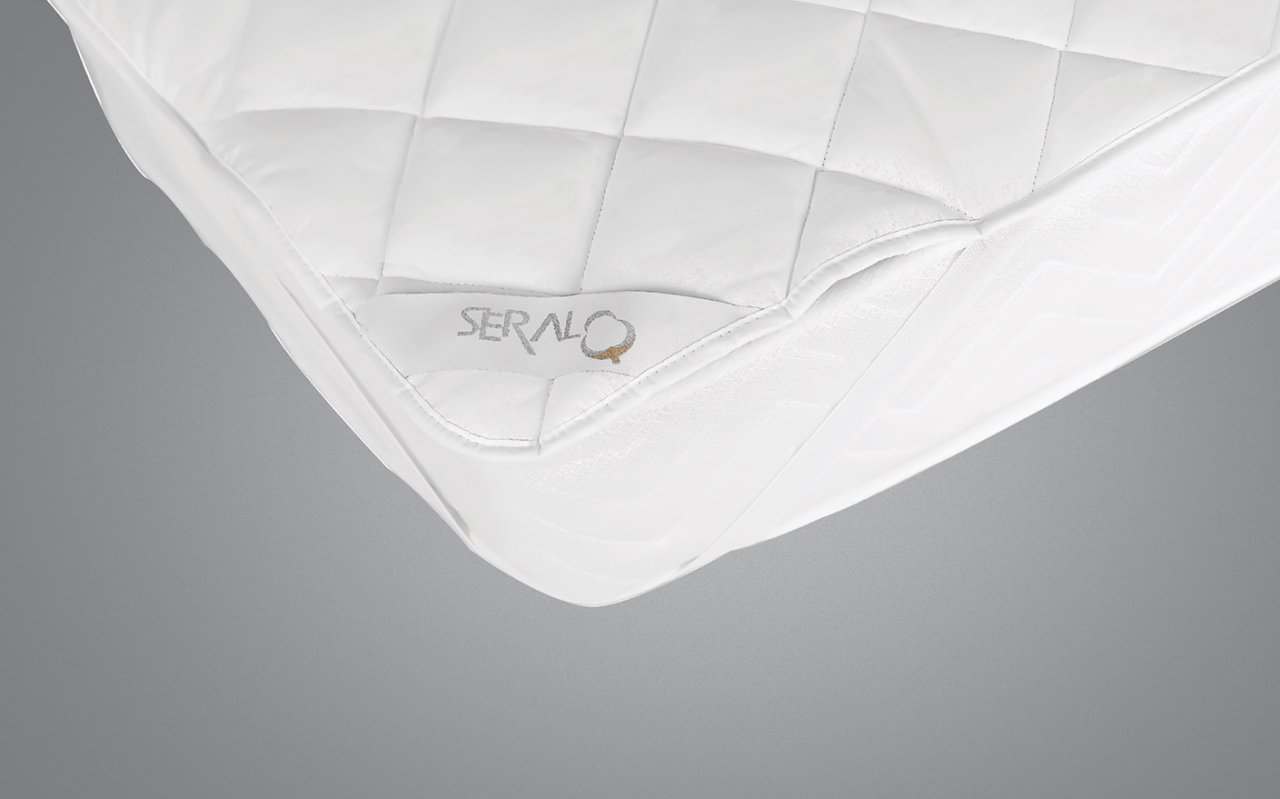


A mattress is one of the most expensive items in a hotel room or a hospital ward, and one of the hardest to clean. A good mattress protector is the simplest way to keep it hygienic and to extend its life. Yet protectors are often bought on price alone, and then replaced early because they are uncomfortable, noisy or unsuited to the laundry.
This guide explains the difference between mattress protectors and mattress pads, what laminated, water-repellent and waterproof mean, which fabrics and fillings to choose, and what to put on your specification for hotel and healthcare use.
Protector, pad or topper?
The terms are often mixed up, so it helps to define them before you compare products:
| Product | Main job | Typical construction |
|---|---|---|
| Mattress protector | Protects the mattress from liquids, stains, dust and wear | A fabric top, often with a laminated layer, sometimes with a light quilted filling |
| Mattress pad | Adds a layer of softness and comfort, and protects the mattress from everyday wear | A quilted fabric with a fibre or wool filling |
| Mattress topper | Changes the feel of the bed | A thicker layer of fibre, foam or other material |
Most hotels use a protector on every bed, and some add a pad for comfort. Healthcare settings usually focus on protection and ease of cleaning.
Laminated, water-repellent and waterproof
These words describe how a protector deals with liquids, and they are not the same:
- Water-repellent means the surface makes liquids bead up and run off rather than soak in straight away. It improves protection without changing the feel of the fabric much.
- Laminated means a thin barrier layer is bonded to the fabric. The lamination is what stops liquids reaching the mattress, while the top fabric gives comfort.
- Waterproof is a stronger claim: that liquid will not pass through under the conditions of a test. If you need a waterproof protector, ask which test the claim is based on.
When you compare offers, ask exactly what each supplier means, and test samples with a measured amount of liquid on a sheet of paper placed under the protector.
Choosing the top fabric
The fabric that touches the sheet determines comfort, noise and how the protector behaves in the wash:
- Cotton and ranforce cotton: breathable and moisture-absorbing; a familiar choice for hotels. Ranforce is a smooth, tightly woven cotton fabric.
- Cotton flannel: a soft, brushed surface that feels warm.
- Microfibre: very soft and light, and usually quick to dry.
- Bamboo and TENCEL™ blends: a smooth, cool feel, and a common choice for premium rooms.
Choosing the filling
Many protectors and all pads have a quilted filling. A light silicone fibre filling adds softness without much bulk; ball fibre gives a fuller feel; wool regulates temperature and humidity and suits pads for comfort-focused rooms. Unfilled laminated protectors are the thinnest option and the quickest to dry. Our guide to fillings explains the options in more detail.
Hotel use: what matters most
- Comfort. Guests should not feel or hear the protector. Lie on the sample and turn over before you approve it.
- Fit. The protector must stay in place on your mattress depth. Measure your mattresses and give the exact size and depth.
- Laundry. Check the care label against your washing and drying conditions, and wash samples several times before approving.
- Stock levels. Plan enough protectors per bed to cover the laundry cycle, plus spares for stains and damage.
- Matching pillow protectors. Protecting pillows as well as mattresses keeps a whole bed fresher and extends pillow life.
Healthcare use: what matters most
In hospitals, care homes and clinics, mattress protection is part of infection control. Follow your facility's own requirements for cleaning and disinfection, and specify:
- The level of liquid protection needed, and how it is tested
- Washing and drying conditions, including any thermal disinfection
- Sizes for each bed type in use
- Labelling that housekeeping and laundry teams can read easily
Our hospital textiles page summarises the products Seral supplies to healthcare facilities.
Mattress protector specification checklist
- Mattress size and depth
- Top fabric and fibre composition
- Filling type and weight, or unfilled
- Lamination or water-repellent treatment, and the test behind any waterproof claim
- Fitting method
- Care instructions matched to your laundry
- Labelling and packaging
- Quantities per bed and delivery schedule
Seral mattress protectors and pads
Seral's range includes cotton, wool, microfibre, bamboo and TENCEL™ mattress protectors; laminated protectors with a water-repellent lamination in ranforce cotton (MPR407), cotton flannel (MPR408) and microfibre (MPR414); mattress pads with wool, silicone fibre or ball fibre fillings; and matching pillow protectors. See the full mattress protector and pad range.
Frequently asked questions
Do hotels need a mattress protector on every bed?
It is standard practice. A protector is far easier and cheaper to wash or replace than a mattress, and it helps keep the bed hygienic between guests.
What is the difference between a mattress protector and a mattress pad?
A protector's main job is to protect the mattress, often with a laminated layer. A pad adds softness and comfort with a quilted filling. Some products combine both.
Will a laminated protector feel hot or noisy?
It depends on the product. A breathable top fabric such as cotton, and a thin, flexible lamination, help. Always test a sample on your own beds before ordering.
Next steps
Send us your mattress sizes and laundry conditions through our contact page, and we will suggest suitable protectors and pads and arrange samples.