
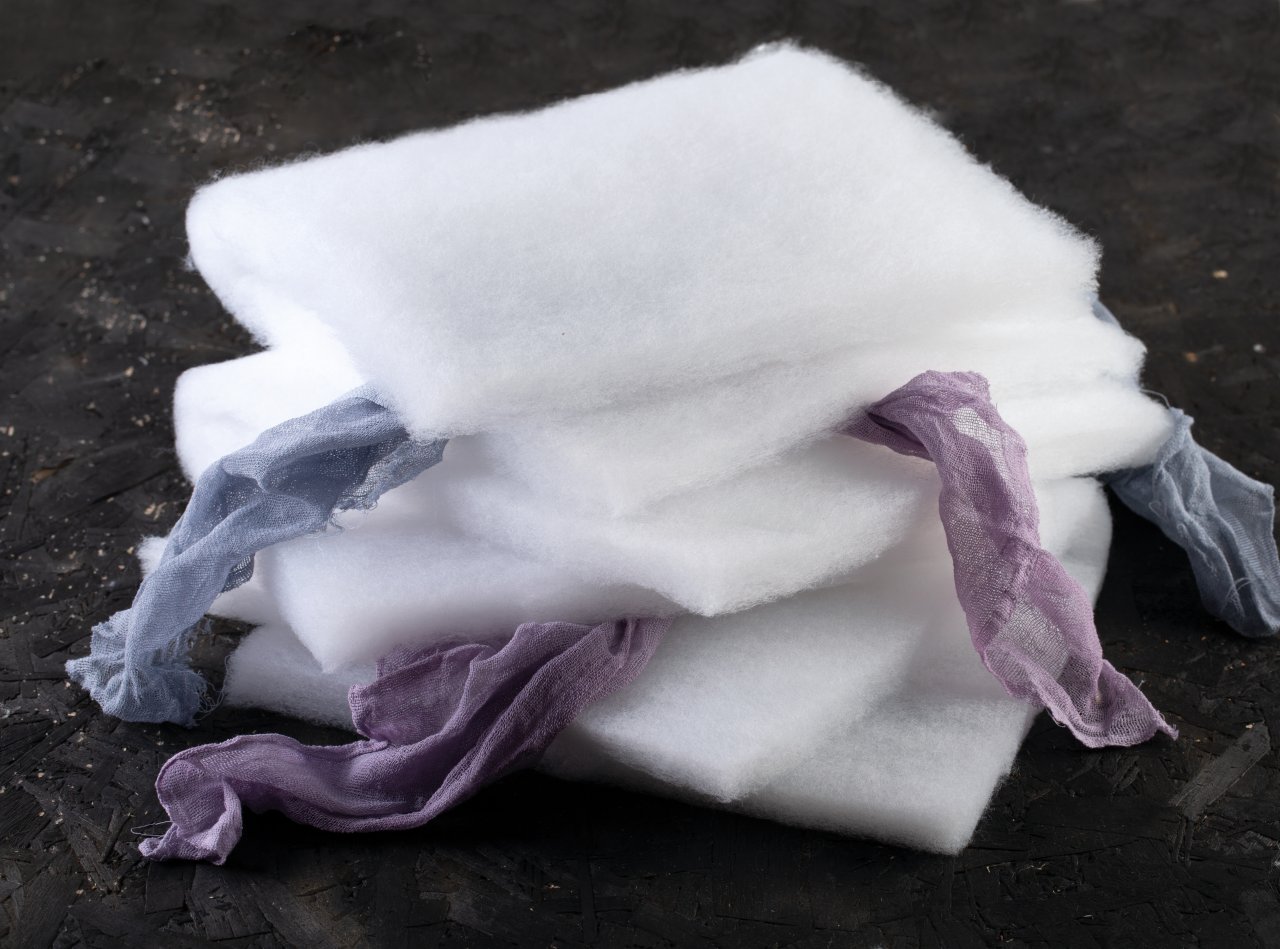


Polyester wadding is the soft layer that sits between foam or frame and the cover fabric in sofas, chairs and headboards. It is also used in quilting, home textiles and garments. If you buy wadding for furniture production, a clear specification saves time and avoids samples that do not match. This guide explains the main types and what to send with a quote request.
What polyester wadding is
Polyester is a synthetic fibre. The most common type, polyethylene terephthalate (PET), is a strong polymer spun into fibres; Encyclopaedia Britannica notes that polyester resists stretching, shrinking and wrinkling and dries quickly. In wadding, polyester staple fibres are opened, carded into a web and layered to build up the required weight and thickness.
Main types
| Type | What it means | Typical use |
|---|---|---|
| Original (virgin) wadding | Made from virgin polyester fibre | Furniture, home textiles, quilting, garments, bedding |
| Regenerated wadding | Made from regenerated (recycled) fibre | Furniture, home textiles, quilting, garments, bedding |
| Siliconised wadding (also regenerated) | Fibre with a silicone finish for a softer, smoother handfeel | Where a softer feel is needed: cushions, quilting, bedding |
| Flame retardant (FR) wadding | Produced from virgin and regenerated raw materials with flame-retardant properties | Products that must meet fire safety rules |
| Black felt wadding | Made from virgin or regenerated black fibre | Furniture, automotive and other textile uses |
At Seral, wadding can be produced in the weight, width, firmness and softness the customer requires. For loose fillings used in cushions and pillows, see silicone fibre and ball fibre.
Virgin or regenerated?
Both are polyester. Regenerated fibre gives the material a second life and is often chosen for cost or sustainability reasons. Virgin fibre gives a more uniform white colour and handfeel. The right choice depends on where the wadding goes: hidden layers in a sofa back have different needs from a visible quilted panel. If recycled content matters for your own claims, ask your supplier what documentation it can provide for that content.
Fire safety
Furniture rules depend on the market. In the UK, for example, the Furniture and Furnishings (Fire) (Safety) Regulations 1988 require filling materials in domestic upholstered furniture to meet specified ignition requirements. Other countries and contract markets have their own rules. If your furniture must meet a fire standard, tell your supplier which one, ask for the relevant test report and test the full composite where the rules require it. We will cover flame-retardant wadding in more detail in a separate guide.
What to put in your quote request
- Weight in grams per square metre (gsm).
- Width and roll length, or cut sizes.
- Thickness and firmness you expect, ideally with a reference sample.
- Fibre: virgin, regenerated or a blend; siliconised or not.
- Colour: white or black.
- Fire requirements and the standard that applies in your market.
- Quantity, delivery schedule and packing preferences.
Read more about fibre-based fillings in pillow and duvet fillings explained, or see how we work with brands in our guide to sourcing from Türkiye.
Next steps
See all products in our fibre and wadding range. For weights, widths and a quote, contact Seral with your specification.