
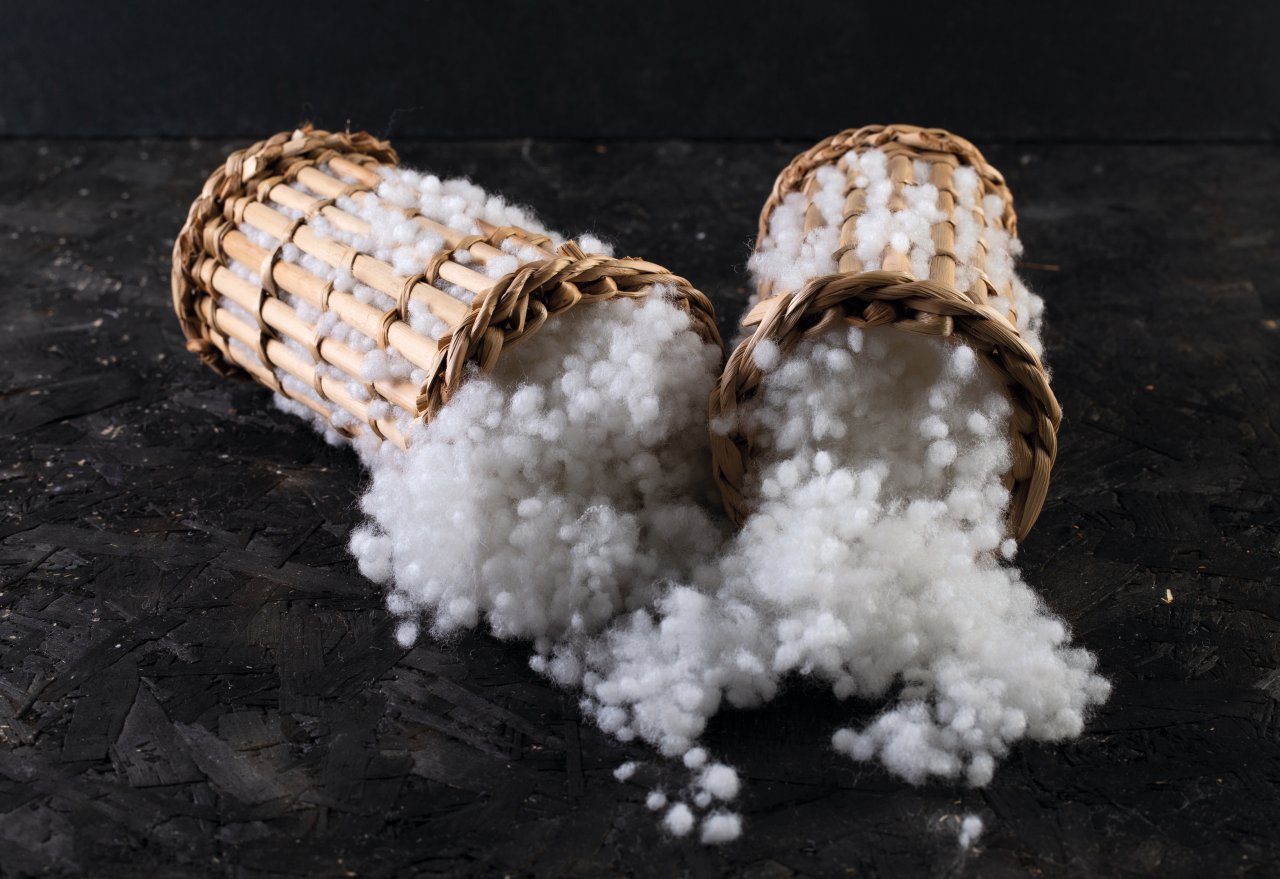


Two pillows can look identical and still sleep very differently. The difference is almost always the filling: its fibre, its structure and how much of it there is. For anyone who buys, specifies or manufactures bedding, understanding fillings is the fastest way to compare products and quotes on equal terms.
This guide explains the fillings used in pillows, duvets and mattress pads, from siliconised polyester fibre and ball fibre to wool, down and plant-based fibres, and what each one means for feel, warmth, care and cost.
Loose fibre or wadding?
Fillings come in two basic forms, and many products use both:
- Loose fibre is blown or filled into a casing. It is the usual filling for pillows, because it moves and shapes around the head and neck.
- Wadding (also called batting) is fibre formed into a continuous sheet of a set weight and width. It is the usual filling for quilted duvets, mattress pads and protectors, because it stays evenly spread between lines of quilting. Wadding is also used in furniture, clothing and other textiles.
When you compare quotes, check whether the filling is given as a fibre weight (for example grams per pillow) or as a wadding weight per square metre.
Synthetic fillings
Most pillows and duvets sold today use polyester fibre in one form or another. The fibre itself is only the starting point; how it is shaped and finished defines the product.
Silicone (siliconised) fibre
Siliconised fibre is polyester fibre with a silicone finish, which makes the fibres slide over each other. The result is a softer, smoother filling that resists clumping. Fibres for bedding are often hollow, so they trap air and give more volume for their weight, and conjugated, meaning they are made so that they curl into a springy, three-dimensional crimp. You will see this combination described as hollow conjugated siliconised (HCS) fibre.
Silicone fibre is popular because it is light, warm, affordable and easy to care for. At Seral it is produced from original and regenerated raw materials and can be made in the softness the customer requires (silicone fibre).
Ball fibre
Ball fibre is siliconised fibre that has been processed on high-speed opening and carding machines into small spherical curls. Because the fibre balls hold air between them and recover their shape well after pressure, ball fibre gives pillows a full, plump look and is very resistant to collapsing (ball fibre). It is a good choice where pillows must keep their shape through heavy use.
Microfibre and microgel
Microfibre is a very fine synthetic fibre, finer than a typical polyester filling fibre. As a filling it feels soft and drapes closely, which is why it is often used as an alternative to down. Microgel is a name used in the bedding trade for very fine fillings of this kind, with a smooth, silk-like feel and comfort close to down (microgel fibre, microgel wadding). Microgel is a good option for guests or customers who want a down-like feel without animal fibres.
Original or regenerated fibre
Polyester fillings are made either from original (virgin) raw material or from regenerated fibre, which is produced by reprocessing fibre. Both are used in bedding and upholstery. The choice affects colour, handle and price, so state on your specification which one you need. Seral produces wadding from both, for example original siliconised wadding and regenerated siliconised wadding.
Flame-retardant wadding
Some contract, furniture and public-building projects require materials with flame-retardant properties. Flame-retardant (FR) wadding is made for these uses. Fire safety rules differ by country and by application, so always confirm the standard your project must meet and ask for the matching test documents.
Natural fillings
Down and feather
Down is the soft cluster that grows beneath the outer feathers of geese and ducks; feathers have a quill and add body. The higher the share of down, the lighter, softer and warmer the product. In Europe, down and feather fillings are labelled under EN 12934, which states the proportions by weight. Seral's goose down duvets range from 90% down to 5% down blends.
Wool
Wool is a natural, renewable fibre that insulates against both heat and cold and helps regulate humidity. It can absorb moisture up to about a third of its dry weight without feeling damp, which makes wool duvets and mattress pads comfortable across seasons (wool wadding, wool fibre).
Camel hair, cashmere and alpaca
Speciality animal fibres are used for premium duvets. Camel hair is collected when camels moult naturally, and it is valued for its insulation and thermoregulating properties (camel hair fibre). Cashmere and alpaca are typically blended with wool in luxury duvets.
Cotton, silk and kapok
Cotton is a familiar, breathable natural filling, especially in traditional quilts and mattress pads. Silk filling is very light and smooth and is used in premium duvets. Kapok is a light plant fibre from the seed pods of the kapok tree and is used in natural-fibre pillows and duvets.
Bamboo, TENCEL™ and other plant-based fibres
Fibres described as bamboo in bedding are usually regenerated cellulose fibres made from bamboo pulp. TENCEL™ is a brand of lyocell, a cellulose fibre made from wood pulp. Both are used on their own or blended with microgel or silicone fibre to give a cool, smooth feel. Corn and soybean fibres are also used in blends.
Fillings compared at a glance
| Filling | Feel | Typical use | Good to know |
|---|---|---|---|
| Silicone fibre | Soft, light, springy | Pillows, duvets, mattress pads | Affordable and easy care; softness can be adjusted |
| Ball fibre | Full, plump, resilient | Pillows, cushions | Keeps its shape under heavy use |
| Microgel | Very soft, down-like | Pillows and duvets as a down alternative | No animal fibres |
| Down and feather | Light, soft, warm | Premium pillows and duvets | Character depends on the down share; labelled by weight |
| Wool | Dense, breathable | Duvets, mattress pads | Regulates warmth and humidity |
| Speciality fibres | Light, warm | Luxury duvets | Usually blended |
| Plant-based fibres | Smooth, cool | Pillows and duvets, often in blends | Check the exact fibre and blend on the label |
How to specify a filling
- Name the fibre and its form, for example siliconised ball fibre, or 100% wool wadding.
- Give the filling weight: grams per pillow, or grams per square metre for wadding.
- For synthetic fibre, state original or regenerated, and any softness or loft target.
- For down and feather, give the down and feather percentages.
- For blends, give the percentage of each fibre.
- Add any regulatory requirement, such as flame retardancy or labelling standards for your market.
Fibre and wadding from Seral
Seral began working with fibre carding machines in 1989, and our second production facility, opened in June 2017, came with completely renewed fibre production and processing machinery. Today we produce and process synthetic fibre and wadding in Samsun, alongside a range of natural fibres and waddings. See the full fibre and wadding range, read about our fibre production, or download the fibre catalogue.
Frequently asked questions
What is the best filling for a hotel pillow?
There is no single best filling. Many hotels use a synthetic pillow such as silicone fibre or microgel as the standard, because it is easy to launder, and offer down or a firmer pillow on request. Our hotel pillow and duvet guide covers this in detail.
What does hollow conjugated siliconised fibre mean?
It is polyester fibre that is hollow (to trap air), conjugated (made to curl into a springy crimp) and finished with silicone (to feel smooth and resist clumping). It is one of the most common fillings in pillows and duvets.
Is microgel the same as down?
No. Microgel is a very fine synthetic fibre designed to feel close to down. It contains no animal fibres.
Next steps
Need fibre or wadding for your own production, or finished pillows and duvets? Contact Seral with the fibre type, weight and quantity you need.