
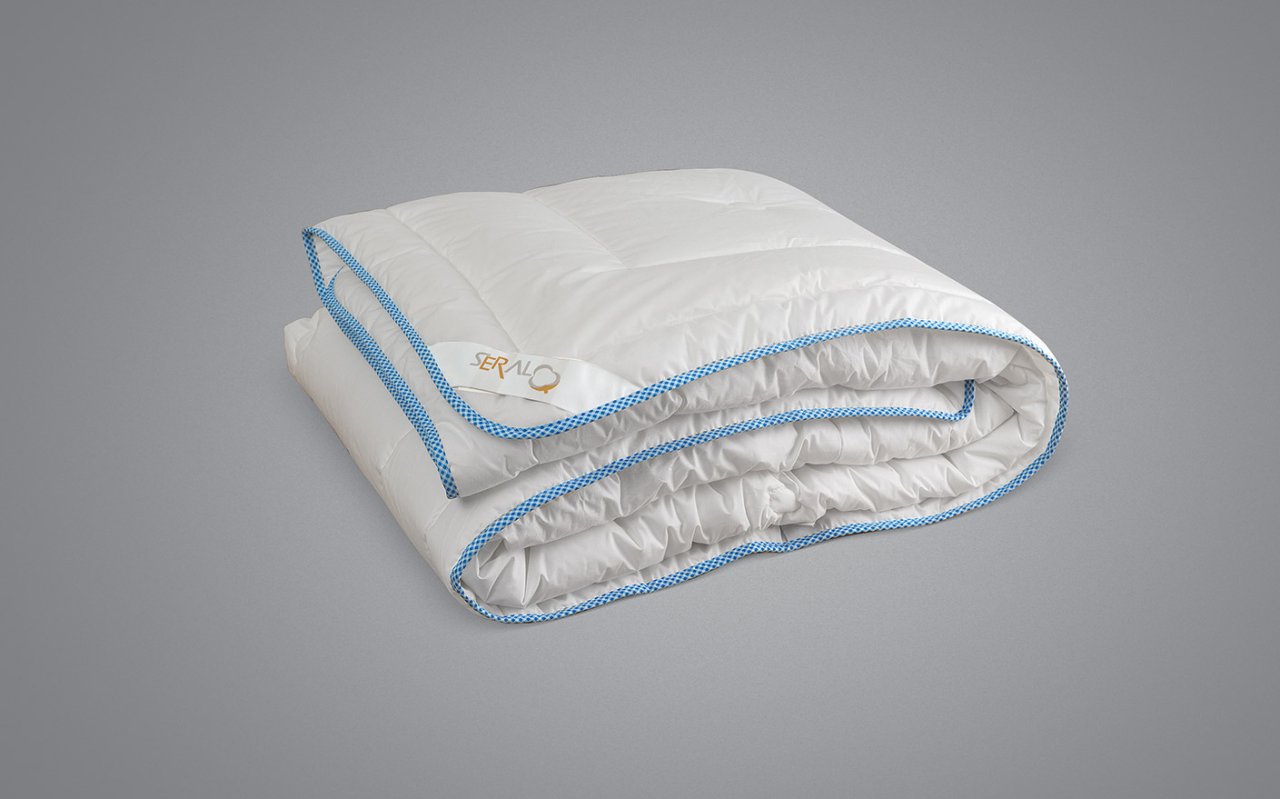


Tog is the number on a duvet label that tells you how warm the duvet is. It is widely used in the UK and Ireland and appears on many duvets sold in Europe. Understanding it helps you choose the right warmth for a season, a climate or a hotel's heating, and it helps you compare offers from different suppliers.
What does tog measure?
Tog is a unit of thermal resistance: how well a material slows down the loss of heat. The higher the tog, the warmer the duvet. One tog equals 0.1 m²·K/W. For duvets, tog is measured in a laboratory on a new duvet laid flat, using the British Standard BS 5335 (source: IDFL).
Typical tog values
Duvets are usually sold between about 4.5 and 15 tog. Common choices are:
| Tog | Typical use |
|---|---|
| 4.5 | Summer, warm climates or warm rooms |
| 7.5–10.5 | Spring and autumn, or all-year use in heated buildings |
| 12–13.5 | Winter; 13.5 is a very common choice in the UK and Ireland |
| 15 | Very cold rooms or people who feel the cold |
Some duvets are sold as "all-season" sets: two duvets, for example 4.5 and 9 tog, that can be used separately or joined together for winter.
Choosing a tog for hotels
Hotel rooms are usually heated or air-conditioned, so many hotels use a medium tog all year and keep a lighter or warmer option on request. Points to consider:
- Room temperature. The warmer you keep the rooms, the lower the tog you need.
- Climate and season. A resort that is busy only in summer has different needs from a city hotel open all year.
- Stock and laundry. One tog for every room keeps stock simple. Two togs give flexibility but need clear labelling so housekeeping uses the right one.
What tog does not tell you
- Quality. Tog measures warmth, not quality. A cheap duvet and an expensive one can have the same tog.
- Feel and weight. Down reaches a given tog with less weight than most synthetic fillings, so two duvets with the same tog can feel very different.
- Breathability. Fillings such as wool and down handle moisture differently from synthetics. See our guide to wool duvets and down vs down alternative duvets.
- Performance after washing. Tog is measured on a new duvet. IDFL notes that poorer quality duvets can lose warmth quickly with use and washing, so ask how a duvet performs after repeated laundering.
Tog and baby bedding
Baby bedding follows separate safe-sleep guidance, and the right tog for a baby is very different from an adult duvet. Follow the official safe-sleep advice in your market and the product's instructions.
Tog and filling weight
Outside the UK and Ireland, many suppliers describe warmth by filling weight in grams per square metre (g/m²) instead of tog. The two are related but not interchangeable, because different fillings give different warmth for the same weight. When comparing offers, ask each supplier for the filling type, the filling weight and, if available, a measured tog.
Next steps
Browse our duvets with down, wool, microgel and plant-fibre fillings, or contact us with the warmth and quantities you need.